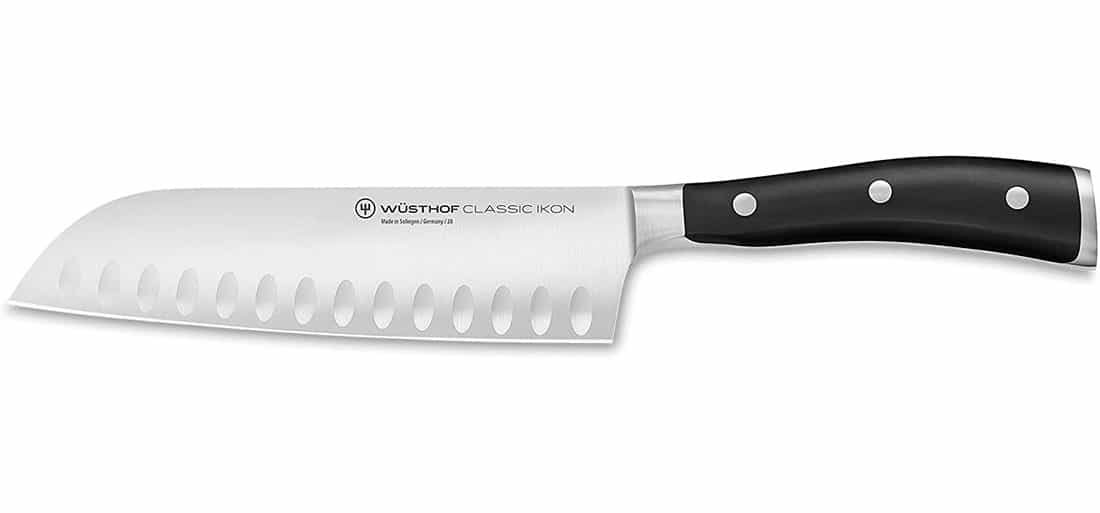
Wusthof Classic Ikon Santoku Knife 7- Inch with Hollow Edge
The Wusthof Classic Ikon Santoku knife is presented in packaging that is tailored to the knife and includes a firm foam insert, just like the company’s other knives. The knife is immersed into this and is therefore adequately shielded from mechanical harm of any type.
The Blade
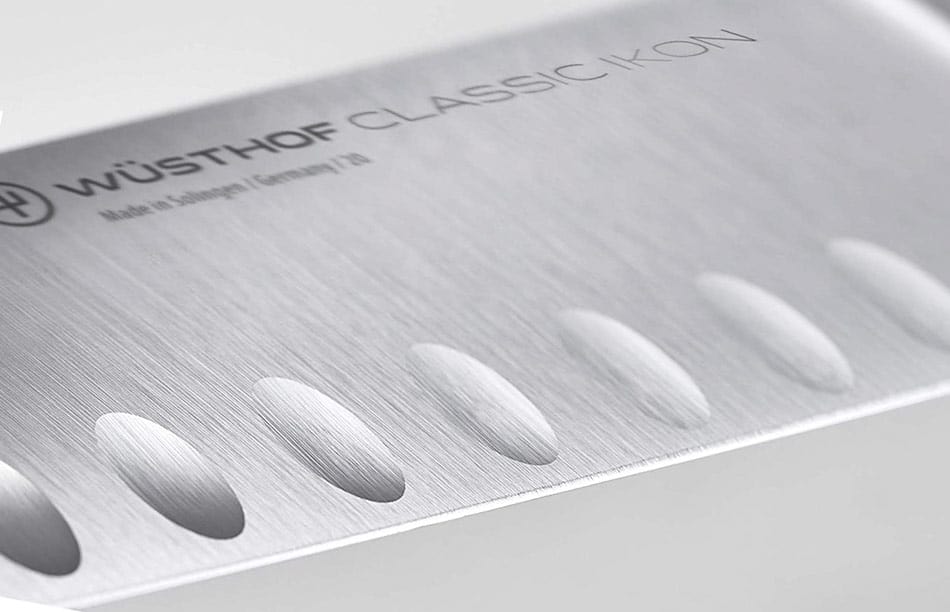
The blade measures approximately 6.7 inches (17 cm) in length, which is a standard measurement for Santoku knives. The total length is around 11.8 inches (30 cm), which is likewise considered to be typical. The scalloped edge, on the other hand, is a unique feature because it reduces frictional resistance during cutting, thereby ensuring that the material being cut does not necessarily stick to the blade when it is being cut.
The Handle
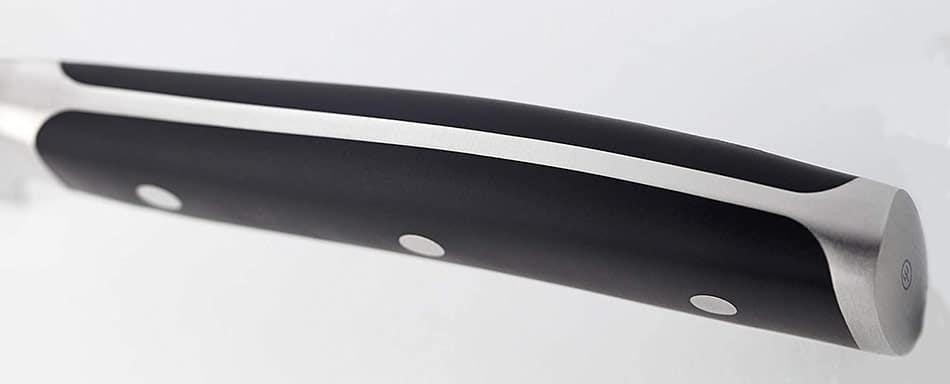
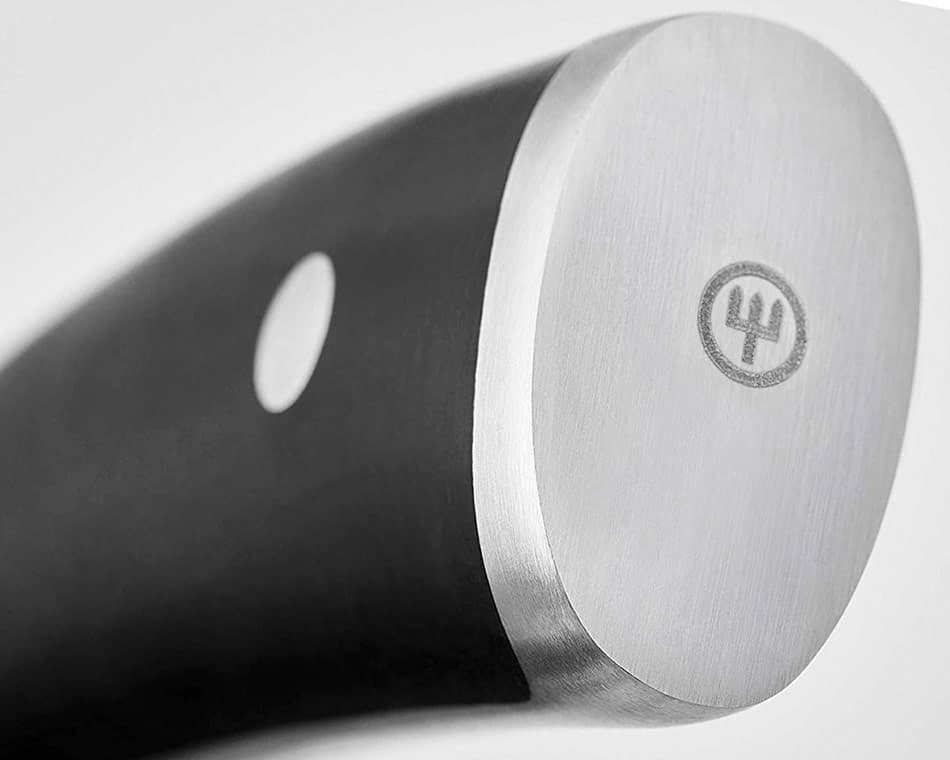
The handle is constructed of Polyoxymethylene (POM), a synthetic material that is extremely robust and has a tighter molecular structure, making it more resistant to fading and discoloration.
Because it is not made of Damascus steel, the Wusthof Classic Ikon Santoku knife does not have a Damascus steel pattern like many of the other Santoku knives. In reality, it is composed of forged stainless steel that has been treated with a chrome-molybdenum-vanadium alloy.
Functionality, Handling, and Range of use
Because there is no need to worry about detaching sticking food when cutting with this santoku, working with it is a pleasure.
True to its name, the blade’s hardness (58 HRC, Rockwell hardness) is enough, and the genuine wood handle undoubtedly provides a unique level of comfort.
This knife is extremely light and easy to use because of its decreased half-crook geometry at the thickening between the blade and the handle. Cutting, slicing, and weighing may be done more quickly and efficiently as a result of this. Furthermore, the thin form makes it possible to utilize the full blade and resharpen it with relative ease.
Additionally, because of the double-sided grind, the knife is suited for both left- and right-handed users.
In addition, the Classic Ikon incorporates a back bolster that serves as a counterbalance when the knife is in use. The addition of a second bolster significantly improves blade control. Furthermore, the Classic Ikon sports a distinctive forward bolster. It is constructed with a front partial bolster so that you may sharpen the blade along the whole length of it. This bolster is also curved inwards to provide you better control over the knife while you are holding it by the blade.
Knife Sharpness & Blade
Wusthof employs a specific combination of German steel that runs the whole length of the knife, according to the company. Each blade boldly displays the components that went into making this steel. It is critical for Wusthof to employ only the best materials when crafting a superb knife, but it is also essential that each blade be perfectly tempered. This tempering allows the knife to keep its edge for an unusually extended period of time, while yet being able to be maintained in your home kitchen without the need to send it out for maintenance.
From the spine of the knife to the edge, this angle tapers to provide the knife with a robust, yet exceptionally sharp edge. It also tapers from the bolster to the tip, providing the knife with both strength and flexibility.
It is equally ideal for vegetables, fruits, and herbs as it is for meat and fish when using the Japanese Santoku knife (sushi). When you use the wide, dynamic form of the 6.7-inch blade, you may chop and weigh with pinpoint accuracy while cutting tiny slices with ease and precision.
Maintenance & Care
Despite the fact that the knife is made of stainless steel rather than Damascus steel, I do not advocate putting it in the dishwasher. The risk of mechanical or chemical harm to the blade, in my opinion, is just too big to take.
When it comes to maintenance, I propose investing in a Japanese water sharpening stone, similar to what I recommend for Damascus knives.
This appears to be a more appropriate option than sharpening steel or something similar.

Features Summary
Pros
– High sharpness
– POM handle
– Fluted edge
Cons
– Upscale price
– Not made of Damascus steel
– Not dishwasher safe
Conclusion
It is an aesthetically appealing knife, albeit I prefer ones made of Damascus steel to stainless steel. The scalloped edge and the comparatively low weight, as well as the POM handle, are all positive features. However, the fact that this knife is not constructed of Damascus steel is definitely apparent on the negative side of the same coin.